Meet the Jury Interview
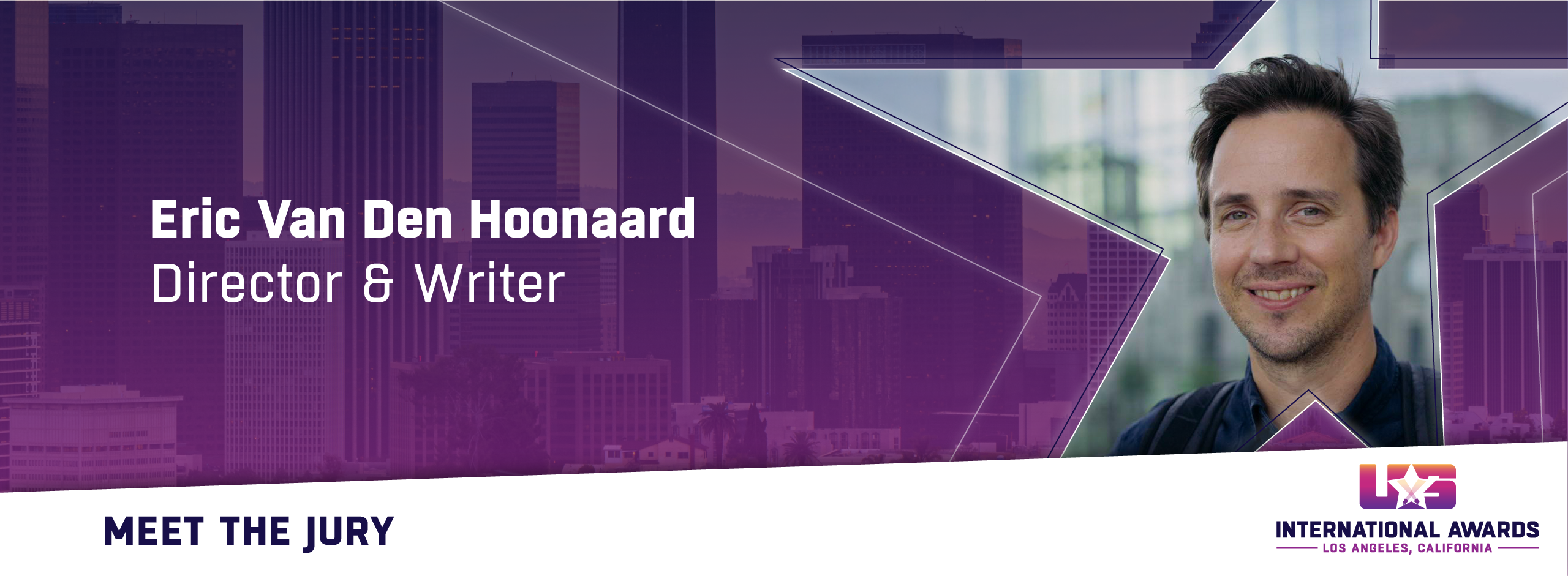
Eric van den Hoonaard
We're thrilled to welcome Eric van den Hoonaard to the jury for the 2026 US International Awards. A self-proclaimed "late bloomer," Eric traded the agency creative desk for the director's chair and hasn't looked back since. Born in Düsseldorf and shaped by formative years in Cape Town, Eric now calls Berlin home—a journey driven by curiosity and a life philosophy of investing in experiences over things. As a multi-award-winning director, he's mastered the art of writing scenes that leap off the page and onto the screen, working with brands like Adidas, Adobe, Mercedes, and Manscaped. His mission? To create work that polarizes in the best way possible, making audiences laugh until they cry, cry with honest emotion, or see something they've never seen before. In this interview, Eric shares his philosophy on enduring countless "no"s for that one magical "yes," what makes a good corporate video, and the production secret to make it look like a million-dollar project.
We are thrilled to have you on the jury for the 2026 US International Awards. Please tell us more about your work background and your everyday work life. Could you also tell us what you enjoy the most in your job?
I’m a true late bloomer. After many years as a creative in ad agencies, I finally became a director. My everyday work life is about getting millions of “no”s before I finally get a yes.
I enjoy the moment a yes arrives most, and the magic of a project coming together when the odds are against it. I’m continually amazed by what human talent can achieve when we come together.
What projects have you done so far? Are there projects that stand out for you personally and what was the most challenging project you worked on so far?
Adidas, Adobe, Manscaped, Sea-Eye. Each of my projects holds a special place in my heart—whether it’s a global brand or a local hero, a big budget or none at all. I generally love creating humorous commercials, but every once in a while, I enjoy making the audience shed a tear. Sea-Eye x Tua is a call to action disguised as a music video for a popular musician.
What are you currently working on? And what else is planned for the upcoming time?
I am trying to figure out how to tell funny stories in less than 60 seconds using AI.
What’s a creative risk you took recently? How did it turn out?
On my last shoot, I was the Directing DoP. It turned out well, but I still prefer to have an experienced DoP by my side. DoP stands for Director of Photography.
What does an award represent to you?
A nice dose of Dopamine.
In your opinion, what makes a “good” corporate video? Alas, what are you looking for in a winning entry?
Lure me into following your story to the very end. Reward me for giving you my attention. Surprise me.
Are there any tips for potential entrants? Production-wise and presentation-wise?
Make it look like a million-dollar project. Choose the best DoP available.