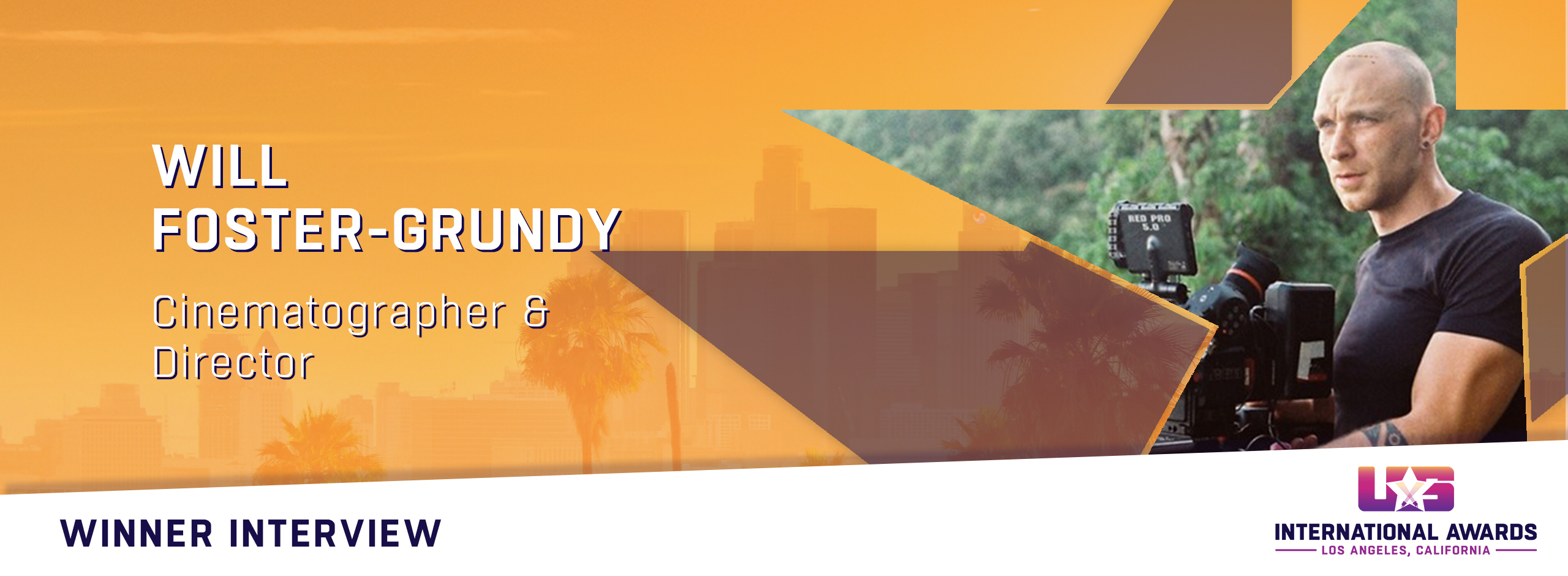
We are honored to speak with award-winning cinematographer and director Will Foster-Grundy, whose latest documentary “Dethroned” won the Grand Award at the 2025 US International Awards. The film, produced by Terra Mater Studios and Four Corners Film & Photography in association with Four Paws, investigates the global exploitation of big cats blending investigative storytelling with cinematic artistry.
Will’s work bridges the worlds of documentary storytelling and cinematic artistry. He has devoted his career to exploring the natural world and the intricate relationship between humans and animals. In this interview, Will shares the challenges and triumphs of creating such an ambitious documentary, reflects on his creative process, and offers insights into what makes a compelling and honest film.
Congratulations on your Grand Award! What does it mean to you, your team, and all the people involved in this project to receive this award?
Thank you. It means a great deal. Everyone involved in this film — whether behind the camera, in post-production, or those who opened their lives to us on the ground — put a lot into making it happen. It’s a tough film in many ways, and it wasn’t always easy to get it made. So, to have it recognized with this kind of award is deeply appreciated. We’re also grateful that the subject matter is being acknowledged, because the story of big cats and what’s happening to them globally deserves more attention.
Can you run us through the creative process behind the winning work you entered into the 2025 US International Awards?
The initial idea came when FOUR PAWS approached Aaron Gekoski to investigate the illegal jaguar trade in Peru. Aaron, a highly experienced photojournalist, had already observed troubling patterns in his work — big cats being exploited across different regions for profit, status, and entertainment. What began as a focused investigation quickly snowballed into something bigger.
We realized the story couldn’t be contained to one location. There was a global trend unfolding — jaguars in Latin America, lions in South Africa, tigers in Thailand, leopards in South Asia — and we needed to follow that thread. Together with FOUR PAWS, we developed the project into a multi-country documentary that aimed to be both cinematic and investigative.
From a creative standpoint, I approached the visual style and pacing with a defined set of principles. I wanted it to feel grounded but lyrical, influenced by narrative cinema in its structure and tone. The biggest challenge was finding the balance between revealing difficult truths and staying respectful to the people and animals involved — especially in sensitive locations like the Himalayas, where a family had suffered a devastating loss.
What I’m most proud of is that we didn’t just document abuse or injustice — we tried to explore the deeper human relationship with these animals, and what it means when we lose that connection.
What were your expectations when entering? Did you assume you would be in the race for a Grand Award?
No, we didn’t expect it. We believed in the film, but awards are never guaranteed. We entered because we thought the message was important and hoped it would resonate. The rest is up to the jury.
Now, please tell us something about yourself. Can you give us a brief bio and disclose your background?
I’m a cinematographer and director originally from the UK and now based in Sabah, Malaysian Borneo. My background is in documentary and factual content, with a strong focus on the natural world and our place in it. I work across both commercial and independent projects. I try to combine strong visuals with honest storytelling, and I’m interested in stories that ask deeper questions about who we are, how we live and for what purpose.
What are some of your works that played a major role in your professional career or that deem to be important to you?
“DETHRONED” is certainly the most ambitious and wide-reaching project I’ve worked on. Before that, I directed and shot a number of short films and factual programmes, including a psychological thriller short and multiple projects exploring human-wildlife conflict. A lot of my work is providing cinematography for high-end natural history shows but I continue to produce both client and passion-driven projects.
What was the most challenging project you worked on so far?
“DETHRONED” was the most challenging overall. It involved international shoots in very different and sometimes difficult environments, with a sensitive subject matter throughout. Filming with the family in the Himalayas stands out as the hardest moment — trying to capture an important part of the story while being respectful of their grief and privacy.
Can you describe your creative process for us?
I try to begin each project with a strong sense of visual identity. I usually set out a series of rules or principles for how we want the story to look, feel, and flow. That includes camera movement, lens choices, pacing, and how we handle interviews or vérité. I draw influence from narrative films as much as documentaries, especially in terms of rhythm and emotional build. But I also try to stay flexible — real life doesn’t follow a script, and you have to be ready to adapt in the moment.
In your opinion, what makes a “good” documentary? What makes a documentary worth watching for you personally?
A good documentary has to be honest. It doesn’t need to have all the answers, but it should offer something real — an insight, an emotion, or a perspective that stays with you. I’m drawn to documentaries that leave room for the viewer to think, and that aren’t afraid of complexity or ambiguity. Strong visual storytelling helps, but it’s the truth behind the images that matters most.
What advice would you give to aspiring filmmakers looking to enter competitions and make a mark in the industry?
Focus on making the best film you can. That sounds obvious, but there’s a temptation to think too much about what festivals want. Instead, be clear about why you’re making the film and what you want it to say. Also, treat people well — your contributors, your crew, your partners. How you go about making the film matters just as much as the final result. And don’t assume success looks the same for everyone. Build slowly, keep learning, and stay committed to the work.