Meet the Jury Interview
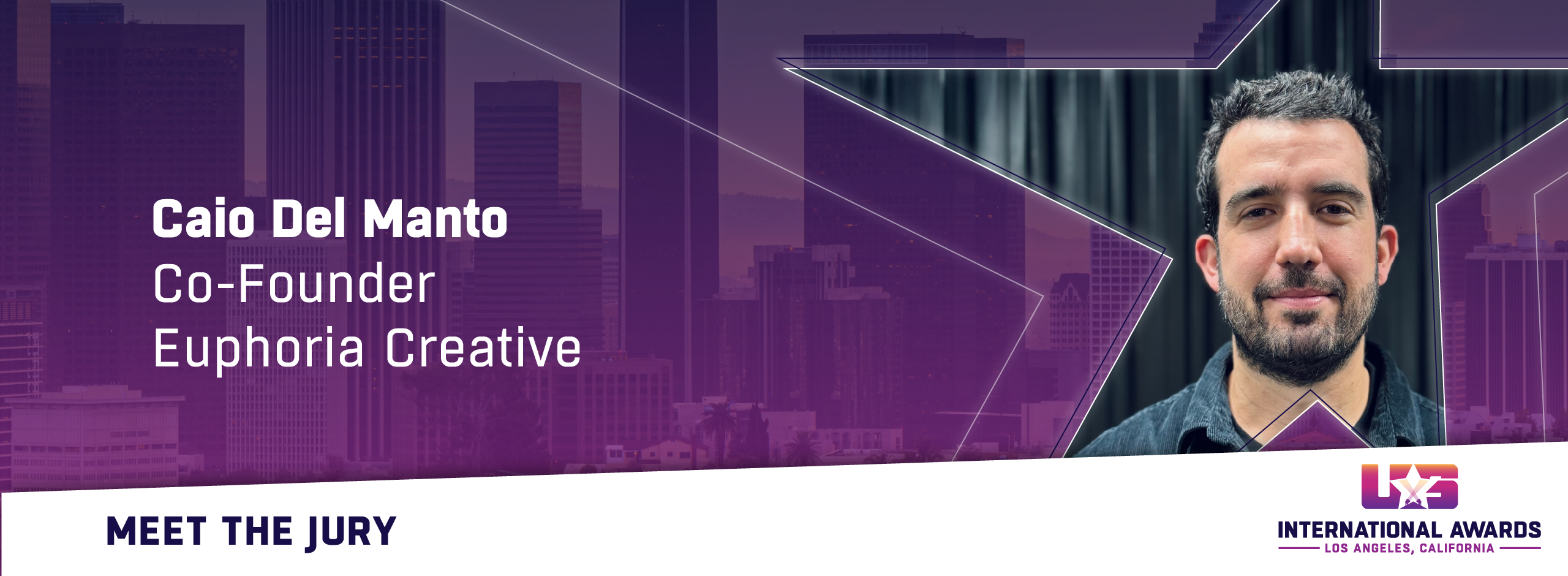
Caio Del Manto
We’re excited to welcome Caio Del Manto to the jury for the 2026 US International Awards. With over 20 years of experience, Caio has built a career challenging brands to move beyond “safe” advertising. From leading global accounts at agencies like Leo Burnett, Ogilvy, McCann, and Media.Monks to steering brand strategy at Mondelez Latin America, his work spans continents and industries. Today, as Co-Founder and CEO of Euphoria Creative, Caio leads a team of over 60 people in Brazil and Mexico, helping brands like Amazon Music, Netflix, Dove, Hellmann’s, and Twitch escape apathy and spark meaningful behavior change. In this interview, he shares his approach to culturally relevant campaigns, the creative risks worth taking, and what makes a corporate video truly resonate.
We are thrilled to have you on the jury for the 2026 US International Awards. Please tell us more about your work background and your everyday work life. Could you also tell us what you enjoy the most in your job?
I’m the Co-Founder and CEO at Euphoria Creative, an independent agency based in Brazil and Mexico and built around a simple belief: creativity exists to kill apathy.
My background sits at the intersection of strategy, creativity and operations. I’ve always been less interested in “making ads” and more interested in shifting behavior. That means understanding where a brand is being ignored, commoditized or culturally irrelevant and attacking that tension.
My everyday life is a constant negotiation between ambition and reality. Protecting big ideas from being diluted. Challenging clients when “safe” becomes the default. Pushing teams to go one layer deeper than the obvious. And having an agency to make this ambition happen is part of the challenge.
What do I enjoy the most? When an idea makes people slightly uncomfortable in a good way. That’s usually a sign it might actually matter. And, by thinking this way, how we can help brands elevate their ‘cultural status’.
What projects have you done so far? Are there projects that stand out for you personally and what was the most challenging project you worked on so far?
I’ve worked across FMCG, retail, OOH, entertainment and tech often with category leaders. Ironically, that’s where creativity becomes hardest. When you’re already winning, the real enemy is inertia.
In that sense, we have been developing culturally relevant brand platforms like the collab between Hellmann’s and NBA in Latin America, a project that is going for the 4th year and has helped the brand rejuvenate its audience, shape consumption behavior and has put Hellmann’s in very different conversations that used to be.
In terms of challenging projects, there are many. But being challenging is what motivates the team and myself. And since we set the ambition really high in shaping consumers behavior, each project is a big challenge from the very beginning.
What are you currently working on? And what else is planned for the upcoming time?
Right now, I’m focused on helping brands escape functional conversations and build cultural presence. We’re developing platforms that go beyond campaigns, ideas designed to live across touchpoints, influence behavior and create long-term equity, not just short-term metrics. Projects like the Hellmann’s X NBA collab, projects for the FIFA World Cup and PR stunts for Rock in Rio.
Looking ahead, my ambition is simple: raise the bar. Compete globally. Prove that creativity from Latin America doesn’t need to be “adapted” to international standards it can define them.
What’s a creative risk you took recently? How did it turn out?
Recently, I pushed a client to abandon a perfectly “optimized” communication model. It was performing well, predictable, safe. Instead, we reframed the narrative around a stronger cultural tension, even if that meant simplifying the product message and accepting short-term discomfort. It worked. Engagement increased, but more importantly, the brand felt alive again. All this happens because we try to reframe the ways of working since the very beginning. We start each project with a new kind of marketing funnel, where each step has a reframed concept and news kinds of data you need to look to get to an answer. By starting this way, the rest of the process follows with the same ambition: look at the problem from a different angle to get to innovative answers.
What does an award represent to you?
An award should represent progress. Not volume. Not production scale. Not self-celebration. The best awards highlight ideas that shift standards, strategically, culturally, or creatively. They should reward courage with intelligence, not noise with budget. For me, recognition only matters if it signals that the industry is moving forward.
In your opinion, what makes a “good” corporate video? Alas, what are you looking for in a winning entry?
A good corporate video stops talking about the company and starts talking about meaning. If it feels like a polished PowerPoint with cinematic lighting, it’s not enough. A strong corporate film understands narrative, tension and audience psychology. It respects the viewer’s time and intelligence. In a winning entry, I’ll look for:
Brutal clarity: Why does this exist?
Emotional credibility: Does it feel earned or manufactured?
Intentional craft: Is every frame working toward something?
Behavioral ambition: What kind of reaction does this video is aiming to get?
Are there any tips for potential entrants? Production-wise and presentation-wise?
Production-wise: don’t hide behind aesthetics. If the idea is weak, no drone shot will save it. Start with a sharp point of view. Then execute with discipline.
Presentation-wise: assume the jury knows nothing about your market and owes you nothing. Be clear about the problem, the stakes and the impact.
And one more thing: surprise us. Not with tricks, with thinking.