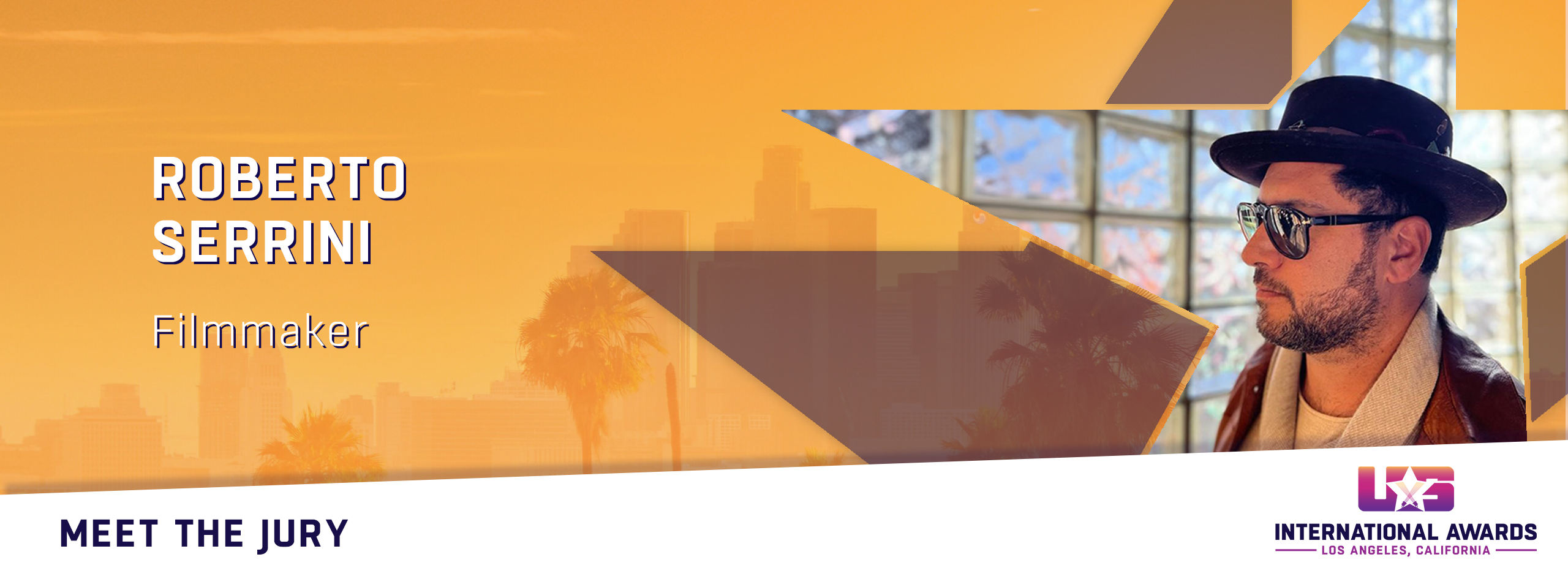
Meet Roberto Serrini, a celebrated filmmaker and advertising creative whose visionary work has brought to life campaigns for iconic brands like Nike, Apple, and Honda. With a dazzling array of accolades, including a Grand Award from the 2023 US International Awards for his documentary "Disco Sauce: The True Story of Penne Alla Vodka," Roberto is an expert in crafting powerful visual narratives. As a seasoned judge in world-class award shows, he brings a wealth of experience to this year's US International Awards, and we're excited to delve into his insights and inspirations in this exclusive interview.
We are thrilled to have you on the jury for the 2025 US International Awards. Please tell us more about your work background and what you enjoy the most in your job.
I split my creative time between directing, mostly commercials or branded docs for large brands, and as an editor of Get Lost Travel Magazine, which explores the world's best travel experiences around the world. While traveling is an obvious pleasure, I do love making a great campaign come to life with amazing creative minds.
You're recognized for seamlessly working across diverse genres and topics. Could you give us a glimpse into some of your projects and how you approach such varied creative challenges?
My focus has been spread wide over my career, which I love. Some love to be known for one type of content, but I think it is the challenge to create in many different spaces that keeps work vibrant and fresh. I've just finished a 3-part documentary series for BMW's 100th anniversary, which is currently on the festival circuit doing well. I love work that transcends advertising and exists in cinema. From automotive, I'm sliding right back into the culinary world with a documentary about an ultra-rare Italian cookbook series called "Italy in Bocca." You wouldn't think these two subjects are related, but they both make me hungry in different ways, and that's what makes them interesting to me.
And what was the most challenging project you worked on so far?
I would say the most challenging project was a 15-film project I directed for Nike, capturing the world's greatest athletes on a Phantom camera around the world. Just to reproduce the same conditions from Bangkok to Bangladesh to Boston was a feat, but the result was some of the most beautiful moments I've ever captured.
What's a creative risk you took recently? How did it turn out?
I made peace with AI. I'm young enough to know that it is foolish to push back against any type of advancement in tech. The earlier you adopt it and understand why it exists, the quicker you can master it. Like anything, it will never replace creativity, but can it help you build a deck or pitch a concept? Oh yes, it can.
What does an award represent to you?
Awards represent an opportunity. I don't necessarily believe in validation; I would like to think that doing the work itself is validation enough, there is no need for it to perform a certain way or another. The award really then becomes an opportunity to share it with more people or to see it from a new perspective, hopefully giving it more weight out there in the world to affect a larger audience.
In your opinion, what makes a "good" corporate video or documentary? Alas, what are you looking for in a winning entry?
The same I think any piece of art should have, and that's a perspective shift. If a film (or photograph, or essay) can make me see the world from another perspective, then that is a true gift and the sign of a powerful piece of work.
Are there any tips for potential entrants? Production-wise and presentation-wise?
Don't try to tell stories. Choose stories that tell themselves and let them play out for you in front of your camera. If you try to force the narrative, it will always feel manufactured. You're better off telling a smaller story with real heart than a larger story without a soul.